561-964-5200
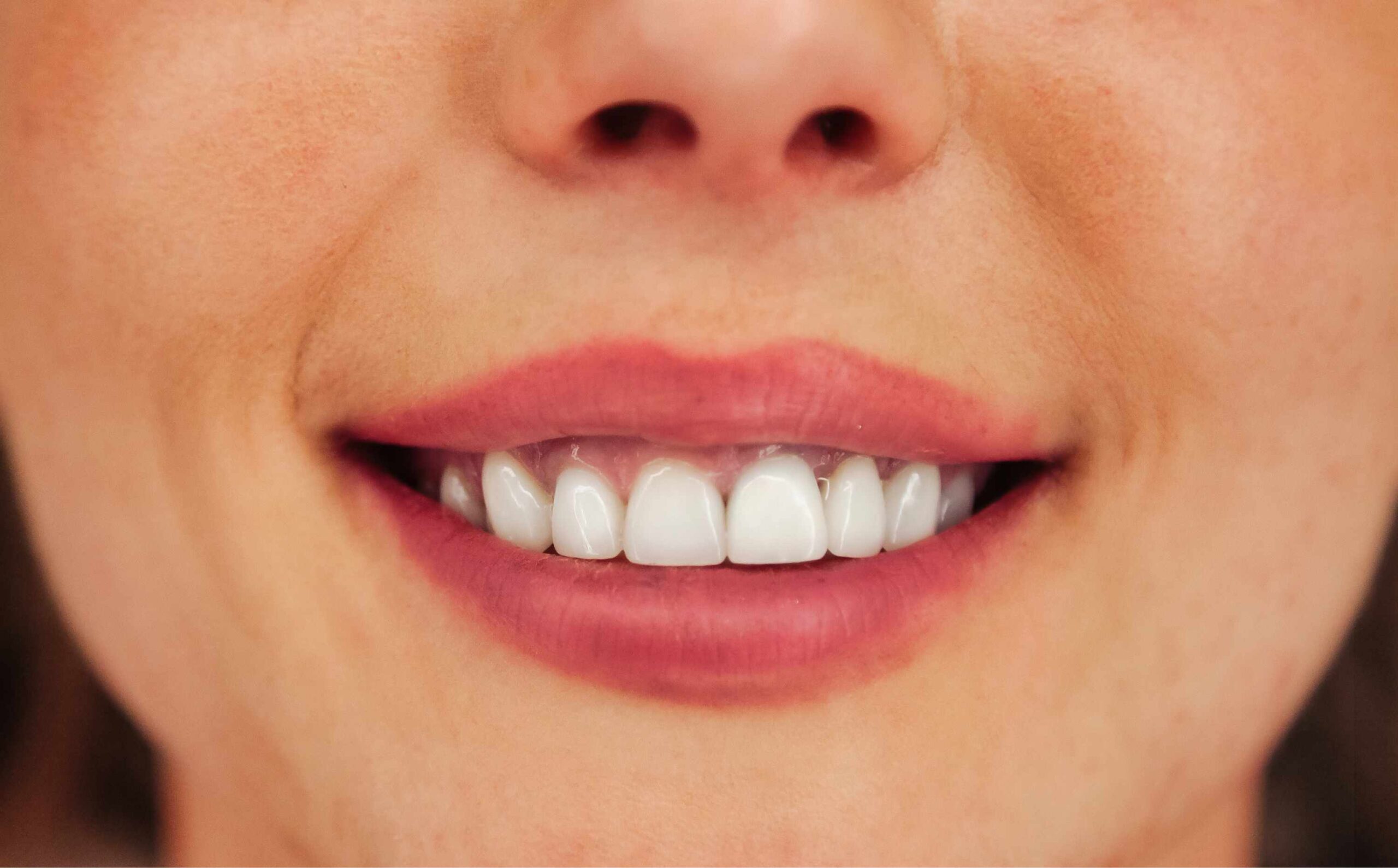
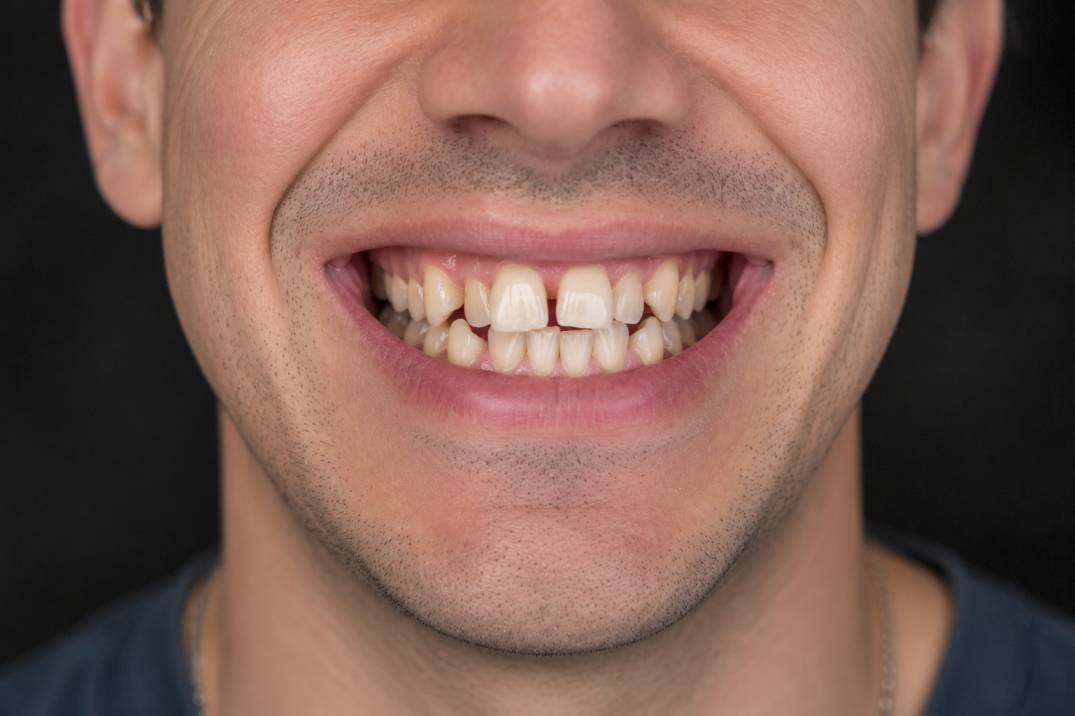
You finished Invisalign expecting a straighter smile. Instead, you noticed something you didn’t have before: small dark spaces between your teeth near the gumline.
These spaces are commonly called black triangles.
The name sounds alarming, but black triangles don’t necessarily mean Invisalign damaged your teeth or gums. In many cases, they are actually open gingival embrasures– small spaces that become visible between the teeth after alignment changes the way those teeth contact one another.
For patients in West Palm Beach, FL, the important question isn’t simply, “Why did Invisalign cause this?”
It’s:
Why did this space become visible, and can anything be done about it?
What Are Black Triangles?
A black triangle is a triangular-looking space between two teeth, usually closer to the gumline.
Healthy gum tissue normally fills much of this area. When the tissue doesn’t completely fill the space, the dark area behind it becomes visible.
They are especially noticeable between the upper front teeth because the area is highly visible when you smile.
Black triangles can occur naturally, but they may become more noticeable after orthodontic treatment because straightening crowded or overlapping teeth changes their positions and the shape of the spaces between them.
That means seeing a black triangle after Invisalign does not automatically mean something went wrong.
Why Can Black Triangles Appear After Invisalign?
There isn’t one universal cause.
Several factors can contribute.
1. Your Teeth Were Previously Crowded
When teeth overlap or are rotated, they may appear to fill the space between one another completely.
Once Invisalign straightens and rotates those teeth, the underlying shape of the gumline can become more visible.
The teeth may now be perfectly aligned while a small triangular space remains near the gums.
2. Tooth Shape Matters
Some teeth are naturally more triangular than others.
If two teeth are wider toward their biting edges and narrower near the gumline, aligning them may reveal a space between their surfaces.
This is one reason two people with similar Invisalign treatment can finish with very different-looking gumline spaces.
3. The Contact Point May Move
The contact point is the area where two neighboring teeth touch.
When orthodontic treatment changes tooth position, the location of that contact can move.
If the contact point ends up farther from the bone and gum tissue between the teeth, more of the gingival embrasure may become visible.
4. Gum and Bone Support Matter
Gum tissue doesn’t exist independently of the underlying bone.
Periodontal health, gum thickness, bone levels, age, and previous inflammation can all influence how completely the tissue fills the space between teeth.
Research into orthodontic treatment and open gingival embrasures has identified factors such as tooth shape, root angulation, contact-point position, periodontal conditions, and age as potential contributors.
This is why a black triangle should be evaluated rather than automatically blamed on Invisalign.
Does Invisalign Cause Gum Recession?
Not necessarily.
A black triangle and gum recession are related-looking but different problems.
Gum recession occurs when the gum tissue moves away from the tooth and exposes more of the tooth or root.
A black triangle is generally an open space between adjacent teeth near the gumline.
You can have a black triangle without having a significant gum recession.
However, if you notice both a changing gumline and new spaces between teeth, an orthodontist or dentist should evaluate the area to determine what is happening.
Why Do Black Triangles Sometimes Become More Noticeable After Straightening?
Think about what happens when you organize a crowded row of objects.
When everything is overlapping, some spaces are hidden.
When everything is separated and aligned, those spaces become easier to see.
Orthodontic treatment can produce a similar visual effect.
Before Invisalign, overlapping teeth may have hidden the shape of the gumline. After treatment, the teeth may be aligned enough that the natural contours between them become visible.
This can be frustrating when your teeth are straighter but your smile doesn’t look exactly as you expected.
The good news is that black triangles are often manageable, depending on their cause and severity.
Can Black Triangles Be Fixed After Invisalign?
Sometimes.
The appropriate approach depends on why the space exists.
Tooth reshaping
In selected cases, a dentist or orthodontist may consider carefully reshaping the sides of teeth to modify their contact points and reduce the visible space.
This is sometimes called interproximal reduction or enamel recontouring, depending on the situation.
It should only be performed when clinically appropriate.
Additional orthodontic movement
If tooth position or root angulation contributes to the space, additional controlled orthodontic movement may help.
For some patients, a refinement phase with clear aligners can improve the appearance.
Gum or periodontal treatment
If inadequate gum tissue or periodontal changes contribute to the appearance, a periodontist may need to evaluate the area.
Treatment isn’t automatically orthodontic.
Combination treatment
Some cases require more than one approach.
The important step is identifying the underlying cause before attempting to close the space.
Can You Prevent Black Triangles During Invisalign?
You can’t completely eliminate the possibility because of some contributing factors- such as tooth shape and natural anatomy that are outside your control.
But treatment planning can help identify patients who may be more likely to develop visible spaces.
Before starting Invisalign, ask your orthodontist to evaluate:
- Existing gum health
- Tooth shape
- Crowding
- Root position
- Contact points
- Gum thickness
- Previous periodontal problems
- Expected tooth movement
Good oral hygiene is also important.
Inflamed gums can change the appearance of the tissue around your teeth and make spaces look different.
What If You Already Have Black Triangles?
Don’t panic and don’t try to close them yourself.
If you’ve recently completed Invisalign and notice dark triangular spaces, schedule an evaluation.
Your orthodontist can determine whether the spaces are related to normal tooth anatomy, tooth positioning, gum changes, periodontal health, or another factor.
This is particularly important if the spaces are accompanied by:
- Gum bleeding
- Gum swelling
- Tooth sensitivity
- Pain
- Visible root exposure
- Increasing gaps
- Changes in your bite
A professional evaluation can distinguish a cosmetic concern from an underlying periodontal or orthodontic issue.
What West Palm Beach Patients Should Know
If you’ve completed or are considering Invisalign in West Palm Beach, FL, black triangles are worth discussing during your treatment consultation.
Patients from West Palm Beach and nearby communities such as Wellington, Royal Palm Beach, Lake Worth Beach, Palm Beach Gardens, and Boynton Beach may have different tooth shapes, gum thickness, and orthodontic needs, so there isn’t one treatment plan that fits everyone.
At McCaffrey Orthodontics, patients can discuss Invisalign and other orthodontic treatment options with the orthodontic team. If you’re concerned about the appearance of spaces between your teeth or want to understand your options before starting treatment, schedule a consultation.
You can also meet Dr. Kevin McCaffrey and discuss your smile goals.
Don’t Assume a Black Triangle Means Invisalign Failed
A straighter smile can sometimes reveal spaces that were previously hidden by crowding or tooth position.
That doesn’t necessarily mean your Invisalign treatment failed. It also doesn’t mean you have gum disease. And it doesn’t automatically mean you need another round of aligners.
The right solution depends on why the black triangle exists.
Your orthodontist can evaluate the tooth positions, gumline, contact points, and overall bite to determine whether the space is simply an anatomical feature or whether additional treatment could improve its appearance.
If you’re planning Invisalign, ask about black triangles before treatment begins. If you’ve already finished treatment and developed them, have them evaluated rather than assuming they’re permanent.
Frequently Asked Questions (FAQ’s)
Why do black triangles appear after Invisalign?
Black triangles can become visible after Invisalign when tooth alignment changes expose natural spaces between the teeth near the gumline, particularly when tooth shape, gum tissue, bone support, or contact-point position contributes.
Are black triangles after Invisalign normal?
Small black triangles can occur after orthodontic alignment and do not necessarily indicate a treatment problem, although a new or changing space should be evaluated by your orthodontist.
Can black triangles after Invisalign be fixed?
Depending on the cause, black triangles may sometimes be improved with orthodontic refinement, tooth reshaping, periodontal treatment, or a combination of approaches.
Are black triangles the same as gum recession?
No. A black triangle is usually an open space between teeth near the gumline, while gum recession involves loss or movement of gum tissue away from the tooth.
Can I prevent black triangles before Invisalign?
You cannot completely prevent them, but an orthodontist can evaluate tooth shape, gum health, crowding, contact points, and planned tooth movement before treatment to identify potential risk factors.