561-964-5200

Misaligned jaws, also known as jaw discrepancies or malocclusions, can cause a range of issues from difficulty chewing and speaking to chronic pain and discomfort. Dental braces are a common and highly effective solution for correcting these misalignments. As an orthodontist, I’d like to explain how braces can fix a misaligned jaw, providing both functional and aesthetic benefits to patients.
Types of Malocclusion
Before diving into how dental braces can correct jaw misalignment, it’s important to understand the different types of malocclusions:
1. Overbite: When the upper jaw significantly overlaps the lower jaw.
2. Underbite: When the lower jaw extends beyond the upper jaw.
3. Crossbite: When some of the upper teeth fit inside the lower teeth rather than outside.
4. Open Bite: When the upper and lower teeth do not touch when the mouth is closed.
Causes of Jaw Misalignment
Jaw misalignment can be caused by various factors including:
- Genetic predisposition
- Childhood habits (thumb sucking, prolonged bottle feeding)
- Injury or trauma to the jaw
- Birth defects
The Role of Dental Braces
Dental braces are a versatile and effective orthodontic tool designed to correct misaligned teeth and jaws. They work by applying continuous pressure over time to gradually shift the teeth and jaw into the desired position.
Components of Braces
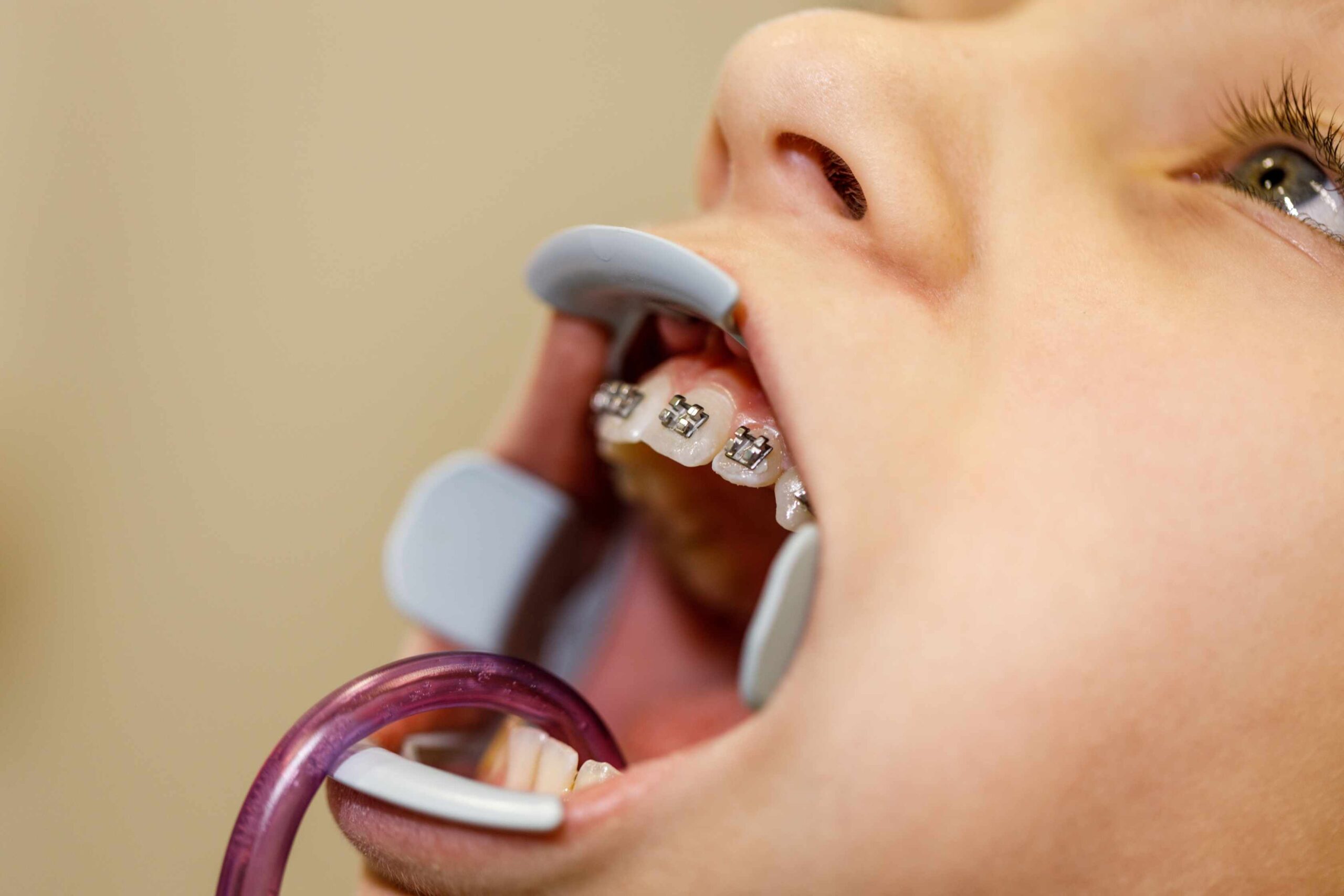
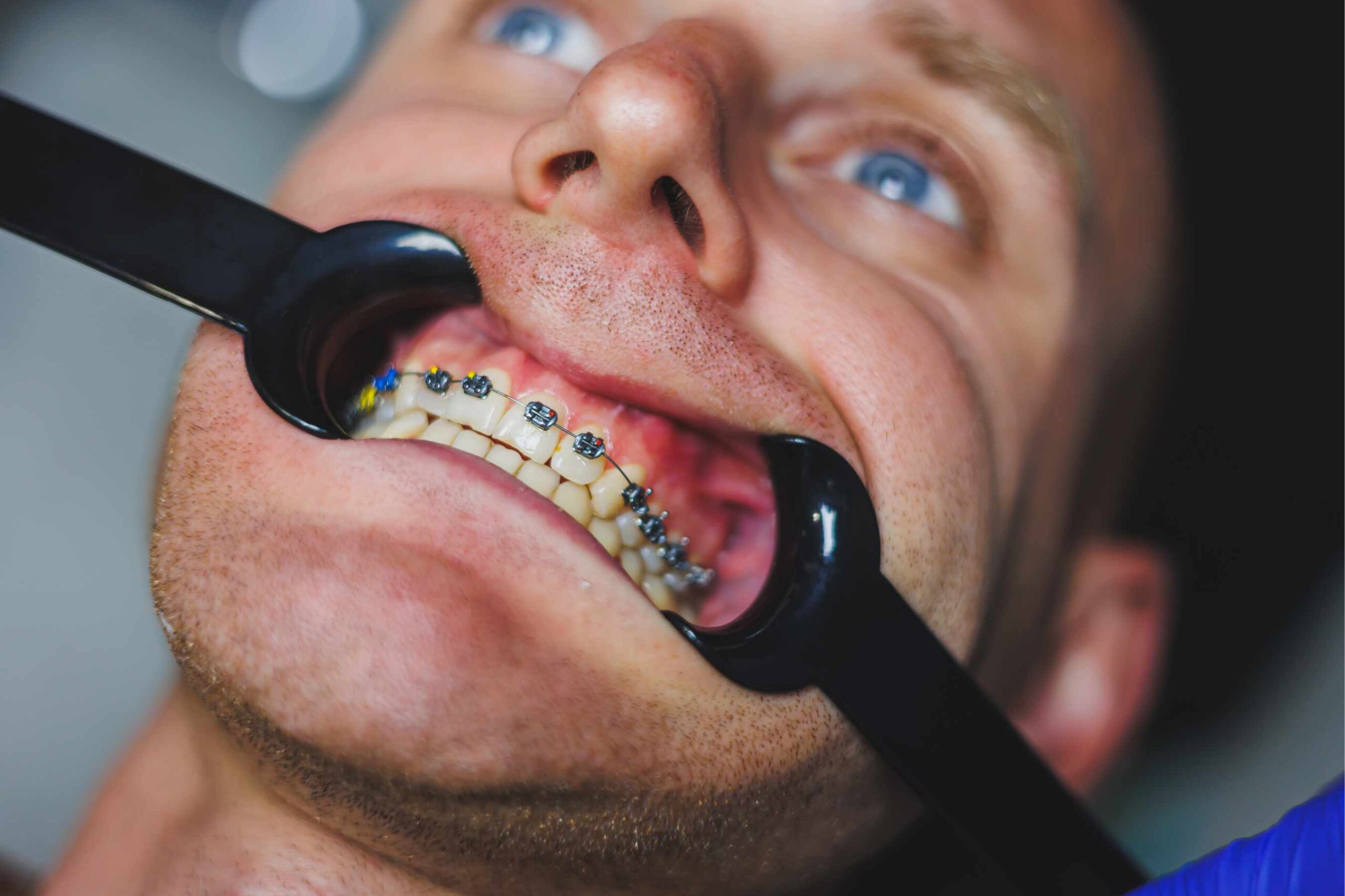
1. Brackets: Small squares bonded directly to each tooth’s front surface.
2. Archwires: Thin metal wires that connect the brackets and guide the teeth into place.
3. Bands: Stainless steel, clear, or tooth-colored materials cemented to the teeth to provide an anchor for the brackets.
4. Ligatures: Small rubber bands or wires that tie the brackets to the archwire.
How Braces Correct Jaw Misalignment?
1. Initial Consultation and Diagnosis
The first step in the treatment process is a comprehensive consultation. During this visit, we will:
- Take X-rays and 3D scans to assess the teeth and jaw alignment.
- Create impressions of the teeth for detailed models.
- Develop a customized treatment plan tailored to the patient’s specific needs.
2. Installation of Braces
Once the treatment plan is established, the braces are installed. The process involves:
- Cleaning and drying the teeth.
- Bonding the brackets to each tooth.
- Connecting the brackets with an archwire.
- Adjusting and tightening the wire to begin the process of moving the teeth and jaw.
3. Regular Adjustments
Braces work through consistent pressure, which means regular adjustments are necessary. Every 4-6 weeks, patients visit the orthodontist to:
- Tighten or replace the archwires.
- Add or adjust bands and ligatures.
- Monitor progress and make necessary adjustments to the treatment plan.
4. Shifting the Jaw
The continuous pressure exerted by the braces gradually moves the teeth into proper alignment. This, in turn, influences the position of the jaw. For more complex cases, additional appliances such as rubber bands, headgear, or palatal expanders might be used to:
- Pull the jaw forward or backward.
- Widen the upper jaw.
- Adjust the bite.
5. Removal of Braces
Once the teeth and jaw are properly aligned, the braces are removed. The process involves:
- Carefully remove the brackets and archwires.
- Cleaning off any adhesive from the teeth.
Benefits of Using Braces for Jaw Misalignment
1. Improved Functionality
Correcting a misaligned jaw improves the overall functionality of the mouth. This includes better:
- Chewing and biting efficiency.
- Clearer speech.
- Reduced wear and tear on the teeth.
2. Enhanced Aesthetics
A properly aligned jaw enhances the overall appearance of the face, providing a more balanced and harmonious look. This can significantly boost a patient’s self-esteem and confidence.
3. Long-Term Oral Health
Proper jaw alignment helps in maintaining long-term oral health by:
- Reducing the risk of tooth decay and gum disease.
- Preventing jaw pain and temporomandibular joint (TMJ) disorders.
- Minimizing the likelihood of dental trauma.
Dental braces are a powerful tool in orthodontics, capable of correcting even severe jaw misalignments. Through a well-planned treatment process involving the application of consistent pressure, braces can gradually shift the teeth and jaw into their optimal positions. This not only improves functionality and aesthetics but also promotes long-term oral health. If you suspect you or your child may have a misaligned jaw, consult with an orthodontist to explore how dental braces can provide a transformative solution.