561-964-5200
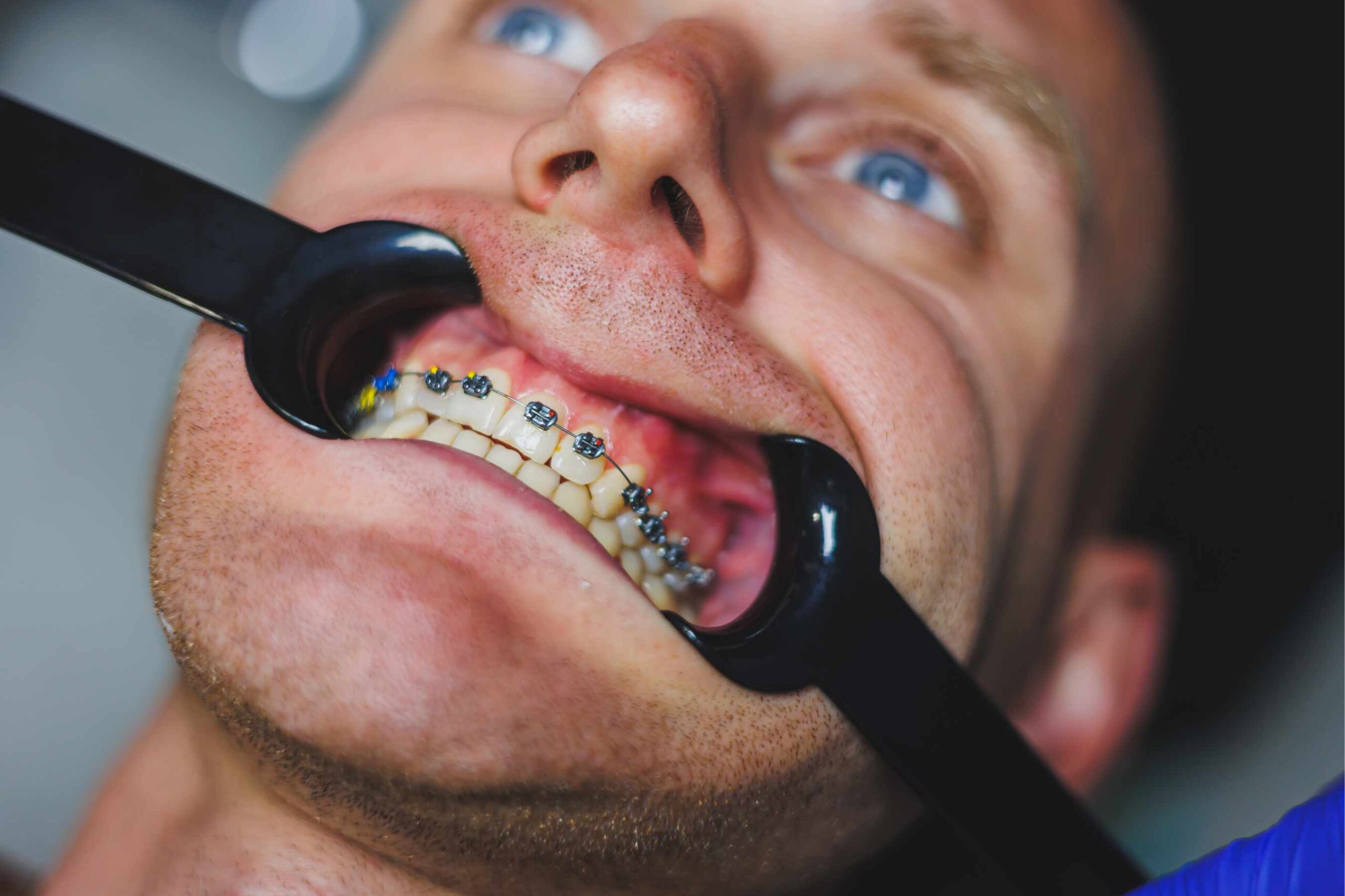
If you’ve searched TikTok or YouTube for ways to widen your jaw naturally, you’ve probably encountered mewing.
The idea sounds simple: keep your tongue against the roof of your mouth, maintain proper oral posture, and your palate and jaw may supposedly become wider over time.
But what happens when a child actually has a narrow upper jaw?
Can tongue posture do the same thing as a palatal expander?
For families in West Palm Beach, FL, the distinction matters. Mewing is an internet trend based largely on claims about tongue posture, while a palatal expander is an orthodontic appliance designed to apply controlled forces to widen the upper jaw in appropriately selected patients.
These approaches should not be treated as interchangeable.
What Is Mewing Supposed to Do?
Mewing generally refers to placing the tongue against the roof of the mouth while keeping the lips closed and maintaining a particular resting posture.
Supporters claim that maintaining this position for long periods can gradually influence the shape of the palate, jaw, and face.
There is a legitimate reason tongue posture gets attention in orthodontics: the tongue, lips, cheeks, teeth, and jaws interact during normal oral function and development.
But that does not mean that deliberately pressing your tongue against the palate will reliably create skeletal expansion.
The major claims associated with DIY mewing, particularly dramatic jaw reshaping or predictable widening of the palate have not been established by high-quality clinical evidence.
That distinction is especially important when parents are deciding how to address a child’s developing bite.
What Does a Palatal Expander Actually Do?
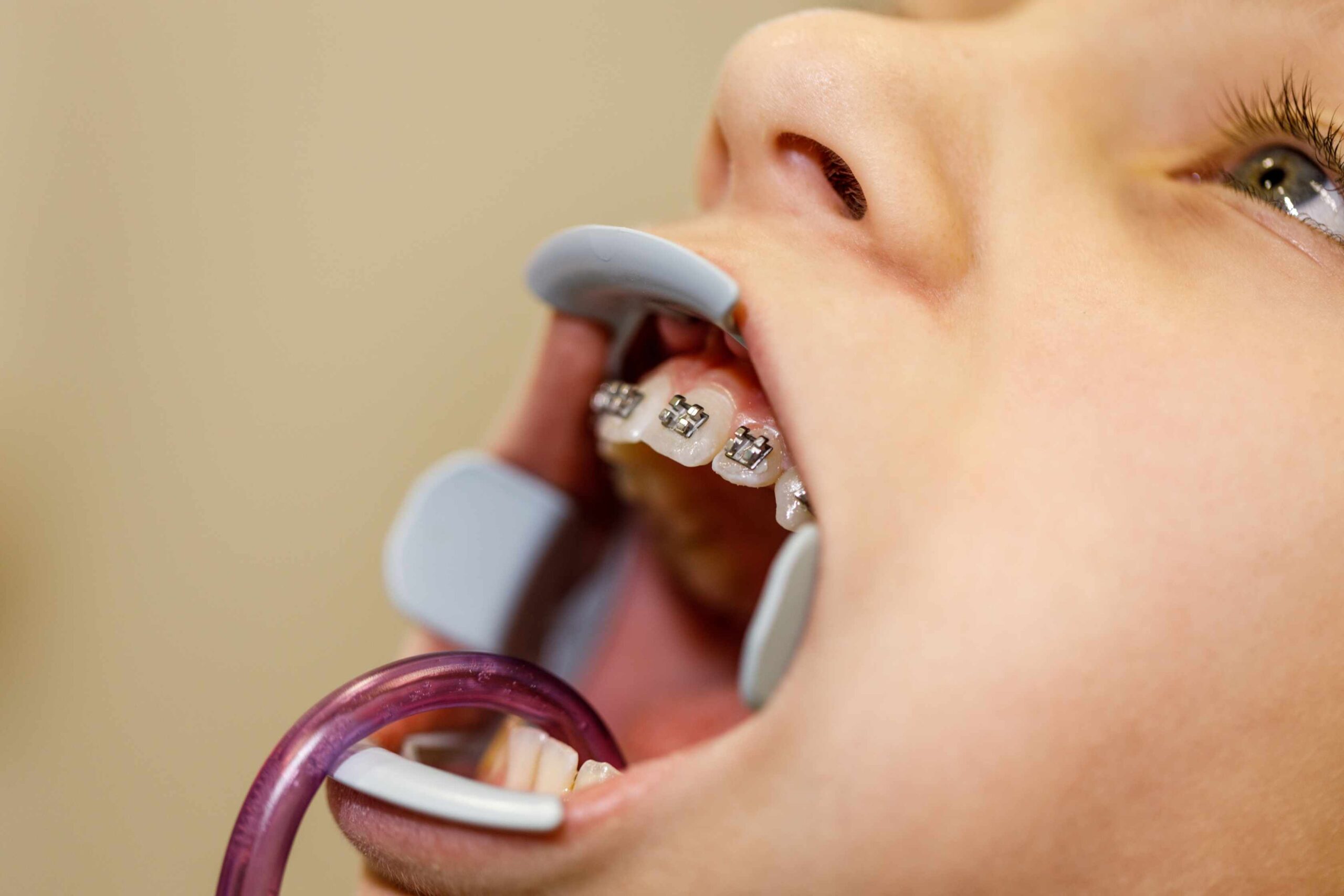
A palatal expander is an orthodontic appliance designed to gradually widen the upper jaw.
At McCaffrey Orthodontics, palatal expanders are used as part of early or interceptive orthodontic treatment when appropriate. The practice explains that expansion can create additional space and help address problems such as crowding, crossbite, and impacted teeth.
The mechanism is very different from simply changing tongue posture.
An expander applies a controlled outward force to the upper jaw. In growing children, the two halves of the upper jaw have not yet completely fused, allowing orthodontic expansion to influence the width of the maxilla.
The appliance is activated according to a prescribed treatment plan rather than relying on the patient to generate an unknown amount of tongue pressure.
Can Mewing Widen Your Jaw?
There is not enough scientific evidence to say that DIY mewing can predictably widen an individual’s jaw. This is where social-media claims often get ahead of the research.
A child’s facial and dental development is influenced by genetics, growth, tooth position, skeletal relationships, oral function, and environmental factors. Simply changing resting tongue posture does not give an orthodontist the same degree of control as a professionally planned expansion appliance.
If a child has a narrow upper jaw or crossbite, the important question isn’t whether they can “mew harder.” It’s whether they actually have a transverse jaw discrepancy that needs treatment.
An orthodontic examination can answer that question.
Why Age Matters With Palatal Expansion
Timing is one of the biggest differences between these two concepts.
Children’s jaws are still developing, which can provide an opportunity for certain orthodontic interventions that become more difficult later.
McCaffrey Orthodontics explains that palatal expanders are particularly useful during childhood because the upper jaw is still developing and can be influenced through controlled expansion. The practice generally describes the expansion phase as taking around three to six months, followed by additional time for stabilization.
That doesn’t mean every child with a narrow-looking smile needs an expander.
It means an orthodontist can determine whether a developing jaw is actually too narrow and whether expansion is appropriate.
What Does the Research Say About Palatal Expansion?
Unlike mewing, palatal expansion has been studied as an orthodontic intervention.
A systematic review of rapid maxillary expansion in children and adolescents with mouth-breathing concerns found evidence that expansion can enlarge the dental arches and nasal/maxillary structures, with short-term improvements in mouth breathing reported. However, the researchers noted that long-term benefits could not yet be established.
A broader umbrella review has also evaluated the effects of rapid maxillary expansion on upper-airway dimensions and breathing function in children and adolescents.
That is a much different evidence base from saying that someone can widen their palate through an internet tongue-position exercise.
Does a Palatal Expander “Widen the Jaw”?
It is more accurate to say that a palatal expander can increase the transverse width of the upper jaw in appropriately selected growing patients.
That can create more room for developing teeth and correct certain bite problems.
For example, expansion may be considered when a child has:
Crossbite
The upper back teeth bite inside the lower teeth because the upper jaw is too narrow relative to the lower jaw.
Crowding
There isn’t enough space in the upper dental arch for teeth to erupt properly.
Impacted teeth
A tooth may be blocked from erupting because of inadequate space or unfavorable positioning.
These are clinical problems that can be evaluated and measured, not simply judged from the appearance of a child’s smile.
Can Mewing Replace a Palatal Expander?
No, not based on current evidence.
Mewing and palatal expansion aren’t equivalent treatments.
Mewing attempts to change oral posture.
A palatal expander is an orthodontic device designed to produce a specific, measurable change in the width of the upper jaw.
If a child has a crossbite or significant transverse deficiency, relying on DIY tongue pressure could delay an appropriate orthodontic evaluation.
That doesn’t mean normal tongue posture is unimportant. Healthy oral function is part of overall orthodontic assessment. But parents should distinguish between healthy posture and claiming that posture alone can reproduce the controlled orthopedic effects of an orthodontic appliance.
What About Adults?
This distinction becomes even more important with age.
As facial growth progresses, the anatomy and flexibility of the upper jaw change. An adult who wants a wider palate should not assume that applying more tongue pressure will produce predictable skeletal expansion.
The appropriate treatment depends on the individual’s age, anatomy, dental condition, skeletal relationships, and the amount of expansion required.
An orthodontist can determine whether conventional expansion, another orthodontic approach, or referral for additional evaluation is appropriate.
What West Palm Beach Parents Should Do
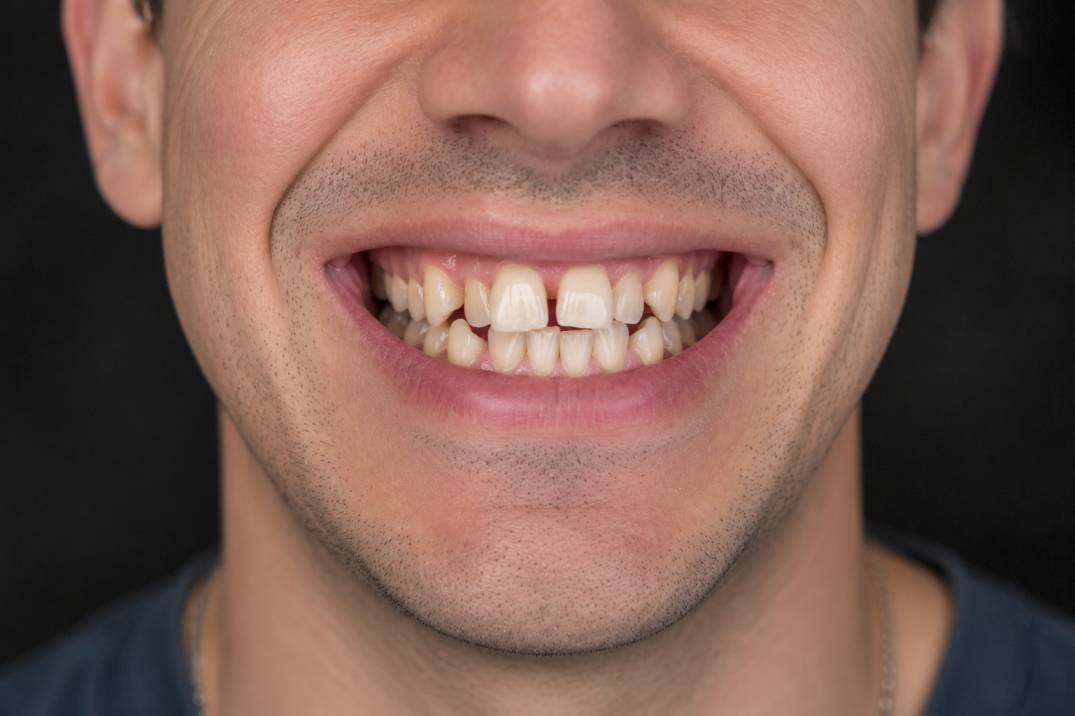
If your child snores, regularly breathes through the mouth, has a crossbite, crowded teeth, a narrow upper arch, or teeth that appear unable to erupt normally, don’t rely on a social-media diagnosis.
These signs can have different causes.
At McCaffrey Orthodontics, early orthodontic evaluation can help determine whether a child could benefit from interceptive treatment. The practice specifically offers early treatment and palatal expansion in West Palm Beach.
Families in West Palm Beach and nearby communities such as Wellington, Boynton Beach, Lake Worth Beach, Palm Beach Gardens, and Royal Palm Beach can schedule an orthodontic evaluation to determine whether expansion or another treatment approach is appropriate.
If you’re unsure whether your child needs an expander, schedule a consultation with Dr. Kevin McCaffrey.
You can also meet our orthodontist and learn more about the team serving families in the West Palm Beach area.
Don’t Let a Viral Trend Make the Diagnosis
Mewing has made tongue posture a popular topic, but popularity isn’t the same thing as clinical evidence.
If your child has a narrow upper jaw, an expander may be recommended because an orthodontist has identified a specific structural or dental problem that controlled expansion can address.
If no such problem exists, an expander may not be necessary.
The goal isn’t to widen every child’s jaw.
The goal is to identify children who could benefit from orthodontic treatment and provide the right intervention at the right stage of development.
Tongue posture and orthodontic expansion are not interchangeable.
If you’re concerned about your child’s jaw development or bite, an orthodontic evaluation can give you something social media cannot: an assessment based on your child’s actual teeth, jaws, growth, and treatment needs.
Frequently Asked Questions (FAQ’s)
Can mewing widen your jaw?
Current evidence does not establish DIY mewing as a predictable way to widen the upper jaw or create skeletal palatal expansion.
Is mewing the same as using a palatal expander?
No. Mewing involves tongue posture, while a palatal expander is an orthodontic appliance that applies controlled forces to widen the upper jaw in appropriately selected patients.
At what age can a child use a palatal expander?
Palatal expansion is commonly considered during childhood and adolescence when the upper jaw is still developing, but the appropriate timing depends on the child’s individual growth and orthodontic condition.
Can a palatal expander fix a crossbite?
Yes. Palatal expansion can be used to correct certain upper-jaw-width problems that contribute to a posterior crossbite.
Should my child try mewing before seeing an orthodontist?
No. If your child has a narrow palate, crossbite, crowding, mouth-breathing, or an eruption concern, an orthodontic evaluation is more appropriate than relying on DIY mewing.