561-964-5200
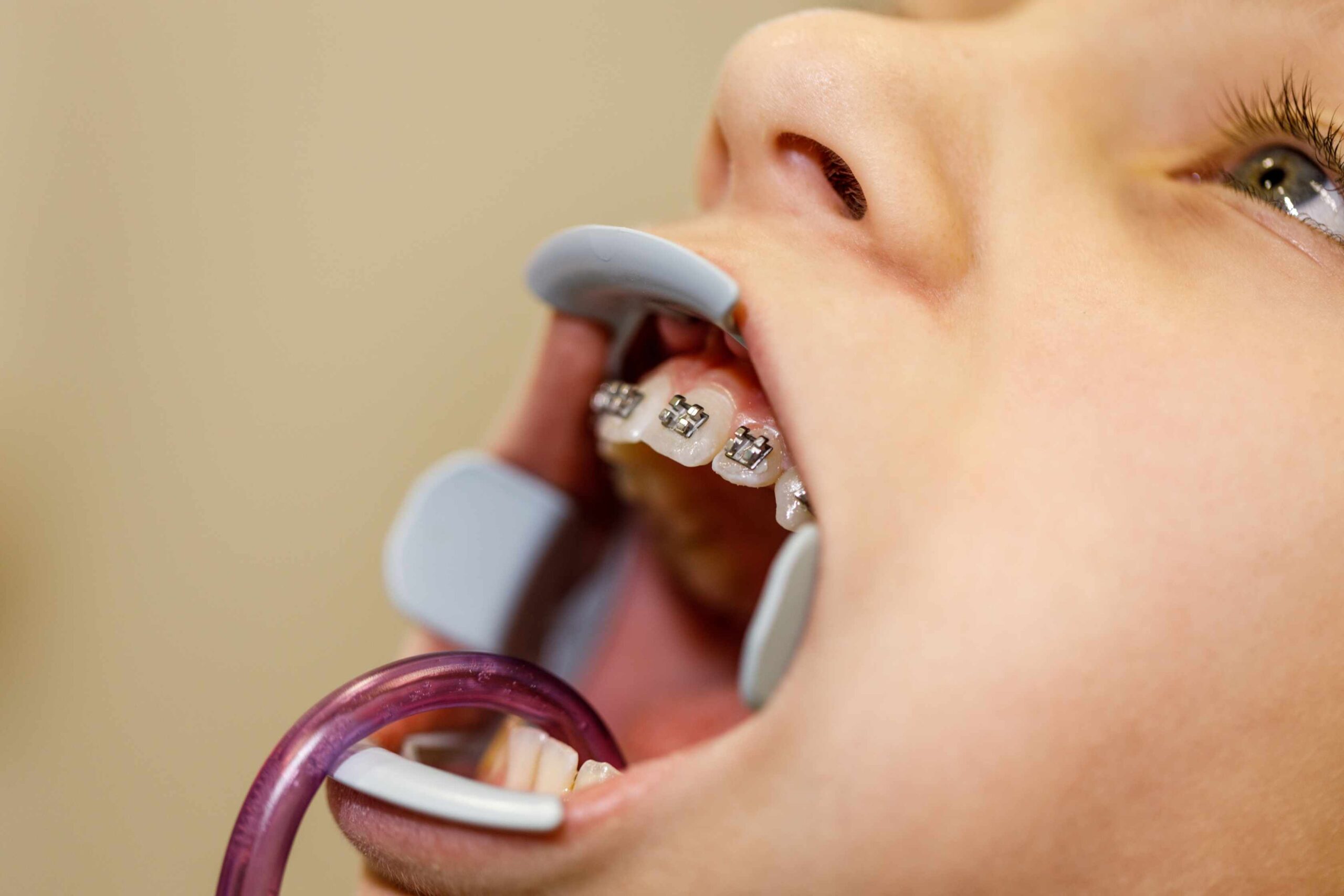
If your child’s orthodontist has recommended a palatal expander, you may have questions beyond crooked teeth or a crossbite.
Could an expander actually change your child’s face shape?
The answer is more nuanced than the dramatic before-and-after photos found online.
A palatal expander is primarily designed to widen a narrow upper jaw and correct specific orthodontic problems. Because the upper jaw is part of the facial skeleton, changing its width can produce some associated changes in the appearance of the smile, nose, and surrounding facial tissues.
But a palatal expander is not a cosmetic face-shaping device.
For parents in West Palm Beach, understanding what expansion can realistically change and what it cannot is important before treatment begins.
What Does a Palatal Expander Actually Change?
A palatal expander applies controlled forces to widen the upper jaw in appropriately selected growing children.
It may be recommended when a child has problems such as:
- A narrow upper jaw
- Posterior crossbite
- Significant dental crowding
- A high or narrow palate
- Certain tooth-eruption problems
The primary objective is to improve the relationship between the upper and lower arches and create a healthier foundation for orthodontic development.
During childhood, the upper jaw is still developing, which can make expansion possible without the surgical approaches sometimes required in skeletally mature patients.
The goal is orthodontic correction first, not changing your child’s appearance for cosmetic reasons.
Can a Palatal Expander Make the Face Wider?
It can produce small, measurable changes in facial soft tissues, but that does not mean your child’s entire face will suddenly look wider.
A 2026 systematic review examined 15 studies involving children treated with rapid maxillary expansion. Researchers found statistically significant changes in areas including alar width, alar-base width, and the nasolabial angle. The changes varied depending on factors such as the child’s age, the expansion protocol, and follow-up period.
An earlier systematic review and meta-analysis similarly found increases in nasal width, mouth width, and upper-philtrum width after expansion and retention. However, the researchers cautioned that the clinical importance of these changes was questionable.
In other words, measurable does not necessarily mean dramatic.
Parents should not expect a palatal expander to completely transform a child’s facial appearance.
Why Can the Face Look Different After Expansion?
The upper jaw is connected to surrounding facial structures.
When orthodontic treatment changes the width and position of the maxillary dental and skeletal structures, nearby soft tissues can respond as well.
That may affect the appearance of areas such as:
The Smile
A wider upper dental arch can change how much of the upper teeth are visible when your child smiles.
The Nasal Area
Research has documented small changes in nasal and alar-base dimensions following rapid maxillary expansion.
Facial Proportions
Changes in the upper jaw can influence the relationship between different facial structures, although the visible effect varies substantially from one child to another.
This is why comparing your child’s expected result to an online “before and after” photograph can be misleading.
Every child starts with different anatomy.
Will a Palatal Expander Give My Child a Better Jawline?
That’s not what an expander is designed to do.
Social media often combines orthodontic expansion with claims about facial aesthetics, jawline definition, and “facial optimization.”
Those claims go beyond what the evidence can support.
Palatal expansion is primarily intended to correct a transverse maxillary deficiency– essentially, an upper jaw that is too narrow relative to the lower jaw.
It isn’t designed to sharpen the jawline, make the face look dramatically wider, or create a particular facial aesthetic.
If your child’s orthodontist recommends expansion, the reason should be a specific clinical finding rather than a promise of cosmetic facial transformation.
Can a Palatal Expander Change the Nose?
There can be changes around the nasal region.
The 2026 systematic review found significant changes in alar width and alar-base width after rapid maxillary expansion, although the amount varied among studies.
Research has also examined the relationship between maxillary expansion and nasal breathing. A systematic review found evidence that pediatric palatal expansion can reduce nasal resistance and increase nasal airflow, although the quality and design of the underlying studies varied.
This is an important distinction:
An expander may influence structures around the nasal region, but it should not be presented as a cosmetic nose-changing treatment.
And if your child has significant breathing or sleep concerns, those symptoms deserve appropriate medical evaluation rather than assuming an expander will solve them.
What About Facial Changes in Younger Children?
Age matters.
Growing children generally have greater potential for orthopedic effects from maxillary expansion than fully mature patients.
That is one reason orthodontists may recommend an early evaluation when a child has a narrow upper jaw, crossbite, crowding, or other developmental concerns.
Research on long-term skeletal changes has found that the proportion of expansion that remains skeletal is greater in less skeletally mature patients, although the available evidence has methodological limitations.
This does not mean that every child should receive an expander early.
It means timing is one factor an orthodontist considers when deciding whether expansion is appropriate.
Does Every Child With a Narrow Smile Need an Expander?
No.
A child’s smile can look narrow for many reasons, and appearance alone isn’t enough to diagnose a transverse jaw problem.
An orthodontist may evaluate:
- Upper and lower jaw width
- Bite relationship
- Crossbite
- Tooth crowding
- Tooth eruption
- Palatal shape
- Facial growth
- Dental midlines
- Existing oral habits
- Overall orthodontic development
The objective is to determine whether there is a genuine orthodontic problem that expansion can address.
What Happens to the Face After the Expander Is Removed?
Expansion doesn’t end the moment the appliance comes out.
After active expansion, the newly created width needs time to stabilize.
Your orthodontist may use a retention period or another appliance to help maintain the result while the surrounding tissues adapt.
This is one reason parents shouldn’t judge the final result immediately after expansion.
Orthodontic treatment is a biological process that develops over time.
What West Palm Beach Parents Should Expect
If your child is being evaluated for a palatal expander in West Palm Beach, FL, focus on the orthodontic reason for treatment rather than expecting a dramatic facial transformation.
Families in West Palm Beach and nearby communities such as Wellington, Royal Palm Beach, Lake Worth Beach, Palm Beach Gardens, and Boynton Beach may encounter a wide range of orthodontic recommendations depending on their child’s age and development.
At Sea of Smiles, parents can discuss their child’s orthodontic development and whether early treatment or palatal expansion may be appropriate.
If you’re concerned about your child’s narrow upper jaw, crossbite, crowding, or facial development, schedule a consultation to have the situation evaluated.
You can also meet our orthodontist and discuss your child’s treatment options with the orthodontic team.
What Parents Shouldn’t Expect From a Palatal Expander
A palatal expander shouldn’t be sold as a way to “reshape” your child’s entire face.
It may produce changes in the width of the upper jaw and associated soft tissues, but the magnitude and visibility of those changes vary.
Current research supports measurable facial soft-tissue changes after rapid maxillary expansion, particularly around the nasal region, but researchers continue to emphasize variability and limitations in the available evidence.
The most appropriate expectation is therefore:
Correct the underlying orthodontic problem, and allow any associated facial changes to occur naturally as part of that correction.
If your child genuinely needs expansion, treating the problem at an appropriate stage of growth may help establish a better relationship between the upper and lower jaws.
The goal is a healthier, more functional bite—not an artificially redesigned face.
Frequently Asked Questions
Can a palatal expander change a child’s face shape?
A palatal expander can produce small measurable changes in facial soft tissues and upper-jaw width, but dramatic facial reshaping should not be expected.
Will a palatal expander make my child’s face wider?
It may increase upper-jaw width and cause small changes in nearby facial structures, but the visible effect varies significantly between children.
Can a palate expander change the nose?
Research has found small changes in nasal and alar-base dimensions after rapid maxillary expansion, but a palatal expander is not a cosmetic nose-changing treatment.
At what age does a palatal expander work best?
Expansion is generally more effective for skeletal correction while a child’s upper jaw is still developing, but the ideal timing depends on individual growth and orthodontic needs.
Does a palatal expander improve breathing?
Some studies show that maxillary expansion can reduce nasal resistance and increase nasal airflow in children, but an expander should not be assumed to treat every breathing or sleep-related problem.